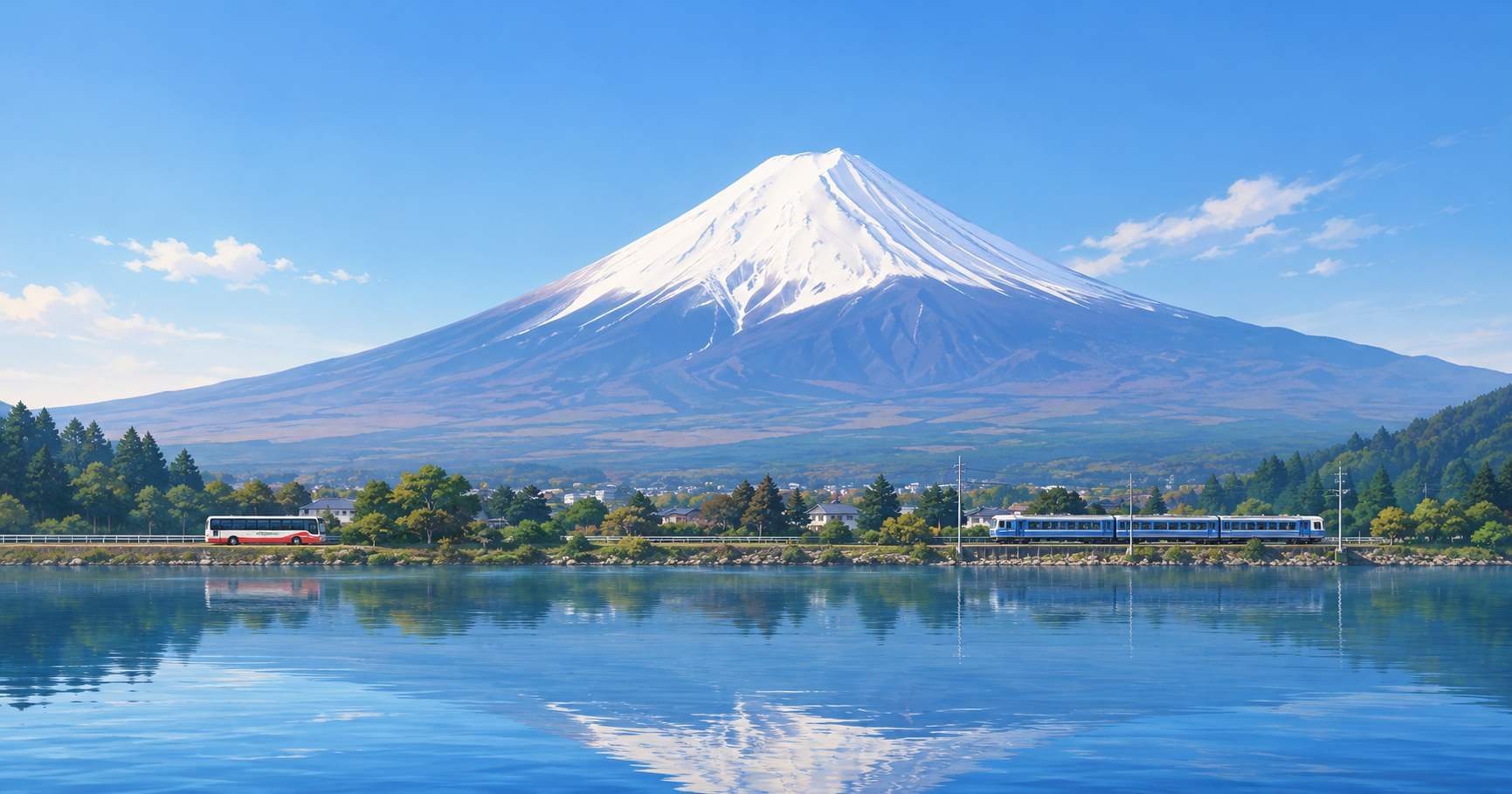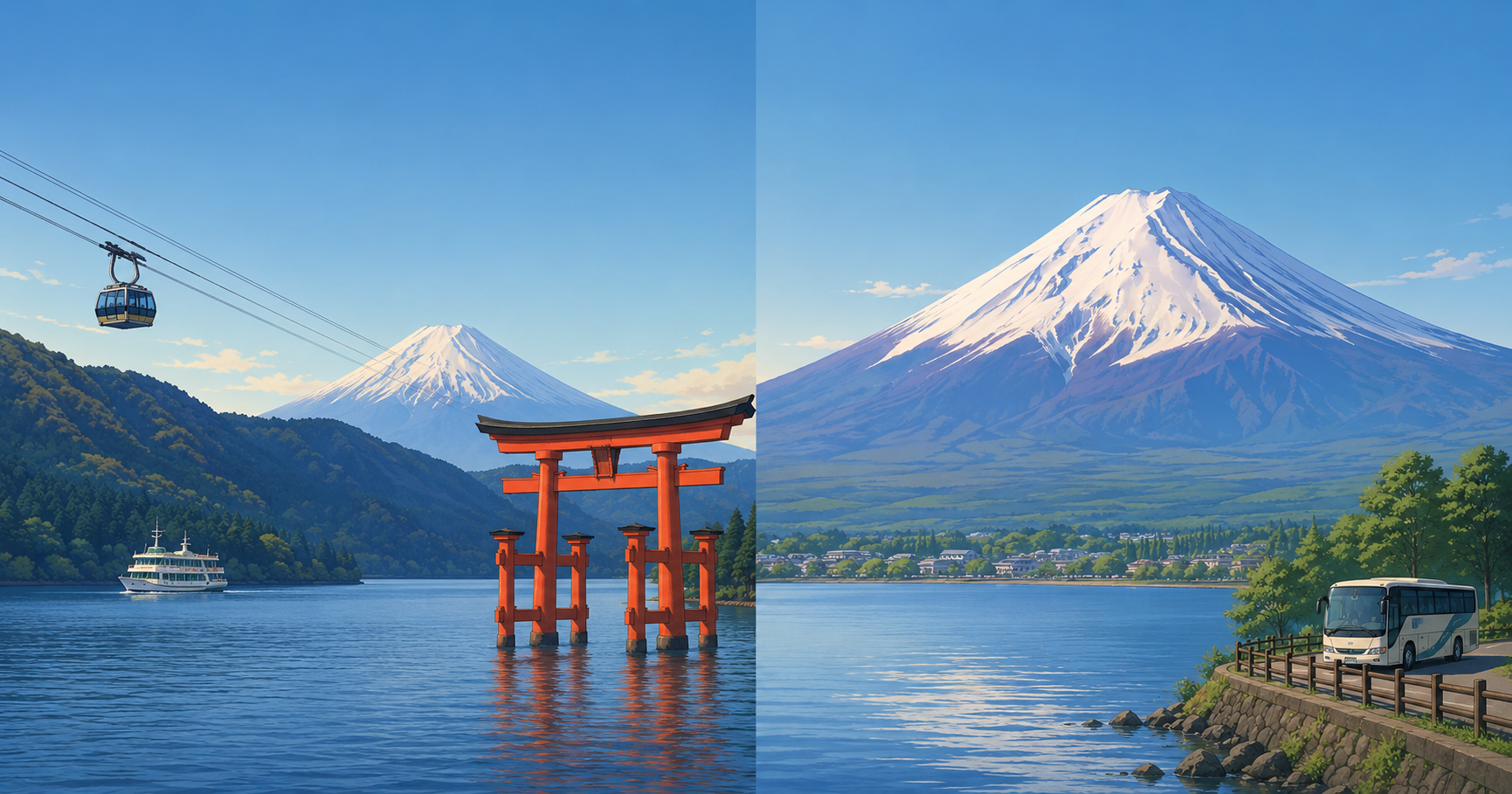
Choose Lake Kawaguchiko if seeing Mount Fuji is your main priority. Choose Hakone if you want hot springs, a ryokan stay, museums, volcanic scenery, and more things to do when Mount Fuji is hidden.
Hakone and Lake Kawaguchiko are two of the most popular trips from Tokyo, and both are commonly advertised as Mount Fuji destinations. However, they offer very different experiences.
Mount Fuji generally appears larger and closer from Kawaguchiko. Hakone provides more varied sightseeing, but the mountain is farther away and is only visible from certain locations when the weather is clear.
This guide compares access from Tokyo, Mount Fuji views, transportation, attractions, costs, crowds, accommodation, and which destination is better for different types of travelers.
Transport information and fares in this article were checked on August 25, 2026. Timetables, fares, passes, and operating conditions can change, so confirm current information before traveling.
- Hakone vs Kawaguchiko: Quick Answer
- Hakone vs Kawaguchiko: Main Differences
- 1. Which Has Better Views of Mount Fuji?
- 2. Which Is Easier to Reach from Tokyo?
- 3. Which Is Easier Without a Car?
- 4. Which Is Better for a Day Trip?
- 5. Which Is Better When Mount Fuji Is Hidden?
- 6. Which Is Better for Onsen and Ryokan?
- 7. Which Is Better for Food?
- 8. Which Is Cheaper?
- 9. Which Is Better for an Overnight Stay?
- 10. Which Is Better by Season?
- Best Choice by Traveler Type
- Can You Visit Hakone and Kawaguchiko in One Day?
- A Note from Sho: Choose the Experience, Not Only the Photograph
- Frequently Asked Questions
- Final Recommendation
- Official Sources
Hakone vs Kawaguchiko: Quick Answer
| Choose Hakone If… | Choose Kawaguchiko If… |
|---|---|
| You want an onsen or ryokan experience | Seeing Mount Fuji is your main goal |
| You enjoy museums and varied attractions | You want a close, classic mountain view |
| You want plenty to do on a cloudy day | You prefer a simpler sightseeing plan |
| You enjoy scenic transportation | You want lakeside photography |
| You are planning an overnight stay | You are planning a Fuji-focused day trip |
Neither destination guarantees a view of Mount Fuji. Clouds can completely hide the mountain even when you are nearby.
Hakone vs Kawaguchiko: Main Differences
| Feature | Hakone | Kawaguchiko |
|---|---|---|
| Mount Fuji view | More distant and available from selected viewpoints | Closer, larger, and visible from many lakeside locations |
| Direct access from Shinjuku | About 1.5 hours by Romancecar | About 1 hour 54 minutes by Fuji Excursion |
| Local transportation | Train, bus, cable car, ropeway, and sightseeing cruise | Sightseeing buses, local buses, trains, taxis, and bicycles |
| Main experiences | Onsen, ryokan, museums, Owakudani, Lake Ashi, shrines | Mount Fuji views, lake scenery, photography, ropeway, parks |
| Cloudy-day value | High | More dependent on Mount Fuji visibility |
| Best trip length | One or two nights; day trip is possible | Day trip or one night |
| Planning difficulty | More complex | Generally simpler |
1. Which Has Better Views of Mount Fuji?
Kawaguchiko is the better choice if your main purpose is seeing and photographing Mount Fuji.
Lake Kawaguchiko is located near the northern base of the mountain. From the north side of the lake, Mount Fuji can appear large behind the water, creating the classic view seen in many travel photographs.
Popular viewing locations include:
- Oishi Park
- The northern shore of Lake Kawaguchiko
- Ubuyagasaki
- Mt. Fuji Panoramic Ropeway
- Some lakeside hotels and ryokan
Hakone also offers beautiful Mount Fuji views, particularly from Lake Ashi, the Hakone Ropeway, Owakudani, and elevated viewpoints. However, the mountain appears farther away and can be hidden by Hakone’s surrounding hills or clouds.
JNTO describes Lake Ashi as a Mount Fuji viewing location on a clear day. That last part matters: Hakone is not a place where you should expect the mountain to remain visible throughout your visit.
Check the official JNTO Lake Ashi guide and Mount Fuji viewing guide for additional information.
The honest answer
If you would be disappointed after traveling two hours without seeing Mount Fuji, check the weather forecast and live cameras before leaving Tokyo.
Even then, visibility is never guaranteed. The mountain has no interest in your carefully planned itinerary. It may be perfectly visible at 8:00 a.m. and completely gone behind clouds before lunch.
2. Which Is Easier to Reach from Tokyo?
Getting to Hakone from Tokyo
The easiest direct route is the Odakyu Limited Express Romancecar from Shinjuku to Hakone-Yumoto Station.
The journey takes approximately 1 hour and 30 minutes. All seats are reserved, and an additional limited express ticket is required in addition to the basic fare or Hakone Freepass.
The Romancecar surcharge between Shinjuku and Hakone-Yumoto is currently ¥1,200 one way.
You can also take a regular Odakyu train or travel by JR to Odawara Station and continue into Hakone. These alternatives may cost less or work better with your rail pass, but they usually require more time or a transfer.
See the official Hakone access guide for current routes.
Getting to Kawaguchiko from Tokyo
The two simplest options are:
- A direct highway bus from Shinjuku or Shibuya
- The direct Fuji Excursion limited express train from Shinjuku
The Fuji Excursion takes at least approximately 1 hour and 54 minutes. The current one-way fare from Shinjuku to Kawaguchiko is ¥4,200.
The highway bus is generally cheaper, with a current base fare of ¥2,200 one way between Shinjuku and Kawaguchiko. However, road congestion can make the journey longer than scheduled.
For full transportation details, read our Lake Kawaguchiko day-trip guide.
Access winner
Hakone is slightly faster to reach by direct limited express train.
However, reaching Hakone-Yumoto is only the beginning. Many major attractions are farther into the mountains and require another train, bus, cable car, or ropeway.
Kawaguchiko Station is closer to the main lake area, although you will still need a sightseeing bus or taxi for locations such as Oishi Park.
3. Which Is Easier Without a Car?
Both destinations can be visited without a car.
Kawaguchiko is generally easier to understand. Most visitors arrive at Kawaguchiko Station and use the sightseeing bus network to travel around the lake.
Hakone has an excellent public transportation network, but the route is more complicated. A typical Hakone sightseeing loop may involve:
- Hakone Tozan Train
- Hakone Tozan Cable Car
- Hakone Ropeway
- Lake Ashi sightseeing cruise
- Hakone Tozan Bus
This can be part of the fun. It can also become confusing when services are crowded, delayed, or suspended because of weather or maintenance.
Check the Hakone transportation status on the morning of your trip. Ropeway, cruise, train, and bus conditions can affect the entire sightseeing loop.
4. Which Is Better for a Day Trip?
Kawaguchiko as a day trip
Kawaguchiko is best for a focused day trip built around Mount Fuji and the lake.
A realistic itinerary includes:
- One northern-shore viewpoint such as Oishi Park
- Lunch near the lake
- One additional attraction, such as the ropeway or a museum
- An afternoon return to Tokyo
Do not try to combine Lake Kawaguchiko, Oshino Hakkai, Chureito Pagoda, Fuji-Q Highland, and the Mount Fuji 5th Station in one relaxed day. They are not all within walking distance of each other.
Hakone as a day trip
Hakone can also be visited in one day, but you need to plan your route carefully.
A common day trip includes:
- Hakone-Yumoto
- Gora
- Owakudani
- Hakone Ropeway
- Lake Ashi sightseeing cruise
- Moto-Hakone or Hakone-machi
This route includes more transportation and may feel rushed if you also visit a museum, onsen, or restaurant.
Day-trip winner
Choose Kawaguchiko for a simple Mount Fuji day trip. Choose Hakone for a more varied but busier sightseeing day.
5. Which Is Better When Mount Fuji Is Hidden?
Hakone wins this comparison.
Hakone has enough attractions to make the trip enjoyable even when Mount Fuji is completely covered by clouds.
Cloudy-day options include:
- Hakone Open-Air Museum
- Polá Museum of Art
- Onsen bathing
- Ryokan dining
- Hakone Shrine
- Owakudani, when operating conditions allow
- Scenic mountain transportation
Kawaguchiko also has museums, cafés, hot springs, parks, and lake activities. However, many visitors choose it primarily for the close Mount Fuji view.
If the mountain remains hidden all day, Kawaguchiko may feel more disappointing—especially if photography was your only goal.
6. Which Is Better for Onsen and Ryokan?
Hakone is the stronger choice for a traditional onsen trip.
Hakone is one of Japan’s best-known hot-spring destinations and offers a wide range of accommodation, from simple inns to luxury ryokan with private open-air baths.
It is particularly suitable for travelers who want:
- A traditional tatami room
- A Japanese dinner and breakfast
- Public or private onsen bathing
- Time to relax at the accommodation
- A one- or two-night break from Tokyo
Kawaguchiko also has onsen hotels and ryokan. Some properties offer excellent views of Mount Fuji from guestrooms or baths. These rooms can be expensive and often sell out early.
Do not assume that every room at a “Mount Fuji view” property faces the mountain. Check the exact room name, photographs, view description, meal plan, and cancellation policy.
If you are deciding between accommodation styles, read our ryokan vs hotel guide.
7. Which Is Better for Food?
Neither destination should be chosen only for nightlife or late-night dining. Many restaurants close earlier than travelers expect, especially outside the busiest station areas.
Hakone food
Hakone works particularly well when your ryokan plan includes dinner and breakfast. Depending on the property, dinner may feature seasonal kaiseki-style dishes, local vegetables, fish, meat, and carefully arranged small courses.
If dinner is included, you may need to check in by a specific time. Arriving late can cause serious problems because the meal is prepared according to the reservation schedule.
Kawaguchiko food
The Fuji Five Lakes area is known for hoto, a Yamanashi noodle dish commonly served with vegetables in a thick miso-based soup.
Restaurants around popular areas can develop long lines during lunch. Eating slightly early is often more comfortable than joining the largest queue at noon.
Food winner
Choose Hakone for a ryokan dining experience. Choose Kawaguchiko for a more casual sightseeing meal built around the day trip.
8. Which Is Cheaper?
Kawaguchiko can be the cheaper day trip, particularly if you use the highway bus and limit paid attractions.
A round-trip highway bus from Shinjuku currently starts at approximately ¥4,400, before local transportation, food, and attractions.
A round trip using the Fuji Excursion currently costs approximately ¥8,400, before local transportation and activities.
For Hakone, the two-day Hakone Freepass from Shinjuku currently costs ¥7,100 for an adult. It includes a round trip on the Odakyu Line and unlimited travel on specified transportation in the Hakone area.
The Romancecar limited express surcharge is not included. Adding the current ¥1,200 surcharge each way produces a total of ¥9,500 for a round trip from Shinjuku with the two-day Freepass and Romancecar.
See the official Odakyu Hakone Freepass page for current prices and coverage.
This is not a perfect price comparison. The Hakone Freepass includes multiple local transportation services, while Kawaguchiko transport and attraction costs depend on the itinerary you choose.
9. Which Is Better for an Overnight Stay?
Hakone is better for travelers who want the accommodation itself to be a major part of the trip.
A Hakone overnight stay gives you time to enjoy an onsen, dinner, breakfast, and mountain sightseeing without forcing the complete loop into a single afternoon.
Kawaguchiko is better when your main purpose is improving your chance of seeing Mount Fuji.
Staying beside the lake lets you wake up early and check the mountain before daytime clouds and haze develop. It also gives you a second opportunity if Mount Fuji is hidden on your arrival day.
If you are forwarding a suitcase while taking a short side trip, read our Japan luggage-forwarding guide. Confirm that both the sending and receiving accommodations can handle the delivery.
10. Which Is Better by Season?
Winter
Winter often provides the clearest Mount Fuji visibility because the air is generally drier. However, temperatures around both destinations can be much colder than central Tokyo.
Snow, ice, strong wind, and transport disruption remain possible. Wear suitable shoes and check operating conditions.
Spring
Cherry blossoms make both destinations popular. Expect crowds, full transportation, and higher accommodation demand during peak periods.
Spring weather can change quickly, and photographs seen online do not guarantee that blossoms and Mount Fuji will both appear perfectly during your visit.
Summer
Summer offers green scenery and outdoor activities, but Mount Fuji is more frequently obscured by clouds and haze. The rainy season, generally from early June to mid-July, can reduce visibility.
Autumn
Autumn foliage is popular in both Hakone and Kawaguchiko. This is one of the busiest periods, so reserve transportation and accommodation early.
Best Choice by Traveler Type
| Traveler Type | Better Choice | Reason |
|---|---|---|
| First-time Mount Fuji photographer | Kawaguchiko | Closer and more recognizable mountain views |
| Couple wanting a romantic overnight stay | Hakone | Strong selection of ryokan and onsen |
| Family wanting varied activities | Hakone | Museums, ropeway, cruise, and transport variety |
| Traveler with only one free day | Kawaguchiko | Simpler Fuji-focused itinerary |
| Art and museum lover | Hakone | More major museum options |
| Traveler worried about cloudy weather | Hakone | More attractions that do not require a Fuji view |
| Traveler who mainly wants an onsen | Hakone | More established hot-spring resort experience |
| Traveler wanting a lake-and-Fuji photograph | Kawaguchiko | Classic north-shore views |
Can You Visit Hakone and Kawaguchiko in One Day?
Technically, transportation exists between parts of the Fuji Five Lakes, Gotemba, and Hakone areas.
Practically, trying to properly visit both Hakone and Kawaguchiko on the same day from Tokyo is not a good plan for most first-time visitors.
The destinations are not next to each other, and local transportation can involve transfers, waiting time, congestion, and weather-related disruption.
You may spend most of the day watching the scenery through a bus window—which is a very expensive way to discover that maps make places look closer than they are.
If you want to visit both:
- Allow at least two days
- Stay overnight in one of the areas
- Check the current connecting bus timetable
- Avoid planning a tight onward train or flight connection
A Note from Sho: Choose the Experience, Not Only the Photograph
I understand why many travelers want the perfect photograph of Mount Fuji. It is one of the images people associate most strongly with Japan.
But the best destination depends on what you want the entire day to feel like.
Kawaguchiko is the stronger choice when the mountain itself is the main event. Hakone is the stronger choice when you want to combine nature, transportation, food, bathing, art, and accommodation.
Neither is automatically “better.” The mistake is choosing Hakone while expecting Mount Fuji to fill the entire sky—or choosing Kawaguchiko without considering what you will do if the mountain remains behind clouds.
Frequently Asked Questions
Is Hakone or Kawaguchiko closer to Tokyo?
The Romancecar from Shinjuku to Hakone-Yumoto takes approximately 1 hour and 30 minutes. The direct Fuji Excursion from Shinjuku to Kawaguchiko takes at least approximately 1 hour and 54 minutes.
However, many Hakone attractions require additional transportation beyond Hakone-Yumoto.
Which has the better Mount Fuji view?
Kawaguchiko generally provides closer and larger views of Mount Fuji. Hakone offers beautiful views from places such as Lake Ashi and the ropeway, but the mountain is farther away and visible only in suitable weather.
Which is better without a car?
Both are accessible by public transportation. Kawaguchiko is generally simpler, while Hakone has a more extensive but more complicated network of trains, buses, cable cars, ropeways, and boats.
Which is better for one night?
Choose Hakone for a traditional onsen and ryokan experience. Choose Kawaguchiko if waking up to a possible Mount Fuji view is your priority.
Which is better in bad weather?
Hakone generally offers more indoor and weather-independent attractions. Kawaguchiko can still be enjoyable, but the trip may feel disappointing if your only goal is seeing Mount Fuji.
Can I use the Hakone Freepass for Kawaguchiko?
Do not assume that the standard Hakone Freepass covers transportation around Lake Kawaguchiko. Check the exact validity area and any separate tickets required for your planned route.
Should I reserve transportation?
Yes. Advance reservations are recommended for the Romancecar, Fuji Excursion, and highway buses, especially on weekends, public holidays, and during cherry blossom or autumn foliage seasons.
Final Recommendation
Choose Kawaguchiko if seeing Mount Fuji clearly and closely is the main reason for your trip.
Choose Hakone if you want a broader experience involving an onsen, ryokan, museums, volcanic scenery, Lake Ashi, and scenic transportation.
For many travelers, the best plan is:
- Kawaguchiko as a dedicated Mount Fuji day trip
- Hakone as a one- or two-night onsen stay
Whatever you choose, leave early, check the weather, reserve transportation, and build enough flexibility into the day. Mount Fuji may cooperate with your plans—but it is under no contractual obligation to do so.