Japan coin lockers are one of the easiest ways to store a suitcase or backpack for a few hours while sightseeing. You will find them at many train stations, airports, shopping centers, and tourist facilities.
Using one is usually simple, but a few details can cause problems: locker sizes are not standardized, large spaces fill quickly, many lockers start a new charge before 24 hours have passed, and an IC card used for payment may also become the key.
This guide explains how to choose a locker, pay with cash or Suica, retrieve your bag, avoid extra charges, and find another option when every large locker is full.
Last fact-checked: August 19, 2026. Prices, sizes, operating hours, payment methods, and storage limits vary by operator and location. The instructions and terms displayed on the actual locker take priority.
- Quick answer: how do coin lockers work in Japan?
- Japan coin locker prices in 2026
- Coin locker sizes: will your suitcase fit?
- Three common types of coin lockers
- Can you use Suica, PASMO, or Apple Wallet?
- How long can you leave luggage in a coin locker?
- Can you open the locker more than once?
- Where are coin lockers located?
- What time can you access a station locker?
- What should you never store in a coin locker?
- What to do when every locker is full
- What if you lose the key, receipt, IC card, or phone?
- Common mistakes to avoid
- Frequently asked questions
- Final checklist
- Official sources
Quick answer: how do coin lockers work in Japan?
- Find an empty locker large enough for your bag.
- Check the price, payment methods, closing time, and maximum storage period.
- Place your bag inside and close the door.
- Pay with coins, a supported transport IC card, or another displayed method.
- Take the physical key, receipt, PIN, or QR code—depending on the machine.
- Photograph the locker number, bank of lockers, floor, and nearest station gate.
- Return before the deadline and use the same key, card, PIN, or QR code to open it.
Do not put your passport, wallet, medication, or other irreplaceable items inside. Keep them with you even if the locker appears secure.
Japan coin locker prices in 2026
There is no nationwide flat rate. The price depends on the location, locker size, operator, reservation status, and sometimes the travel season.
| Locker category | Practical price range at major stations | What may fit |
|---|---|---|
| Extra small / small | About ¥300–¥500 | Handbag, small backpack, shopping bags |
| Medium | About ¥600–¥800 | Large backpack or some cabin-size suitcases |
| Large | About ¥800–¥1,000 or more | Many check-in suitcases, depending on dimensions |
These are planning ranges, not guaranteed prices. For a current major-station example, JR East’s official media listed Shinjuku Station lockers from ¥300 for extra-small units to ¥900 or ¥1,000 for large units in 2025. Some Multi-Ecube medium and large lockers may add ¥100–¥200 during busy periods.
JNTO gives a broader general estimate of ¥300–¥600, but large lockers at major stations can now cost more. Read the price on the exact locker before using it.
Does “one day” mean 24 hours?
Often, no. Many railway-station lockers calculate another day at a fixed time—commonly 2:00 a.m.—rather than exactly 24 hours after you begin.
For example, if you store a bag late at night and collect it after 2:00 a.m., an additional daily charge may already apply. Tokyu’s official locker terms state that another day’s fee is charged at 2:00 a.m. Other operators may use different rules, so check the notice on the machine.
Coin locker sizes: will your suitcase fit?
Japanese lockers are usually labeled small, medium, large, or with letters such as S, M, and L. Those labels do not guarantee identical internal measurements across different machines.
- Small: Best for a handbag, daypack, or small shopping bags.
- Medium: May fit a large backpack or a compact carry-on suitcase.
- Large: Often fits a standard check-in suitcase, but thick or unusually shaped bags may not fit.
- Extra-large: Available at some major stations and airports, but limited in number.
Look for a size diagram or measurements on the locker bank. Wheels, handles, side pockets, and rigid corners all count. Never force a suitcase into the compartment; you could damage the bag, door, or lock.
If you are traveling with a very large suitcase, two large bags, sports equipment, or a stroller, a staffed luggage counter or forwarding service is usually more reliable.
Three common types of coin lockers
1. Key-operated cash lockers
These traditional lockers normally require Japanese coins, often ¥100 coins. Put the bag inside, close the door, insert the displayed amount, turn the key, and take the key with you.
Some locations have a change machine nearby, but do not depend on one. Check that the key actually turns and the door is locked before walking away.
2. Transport IC card lockers
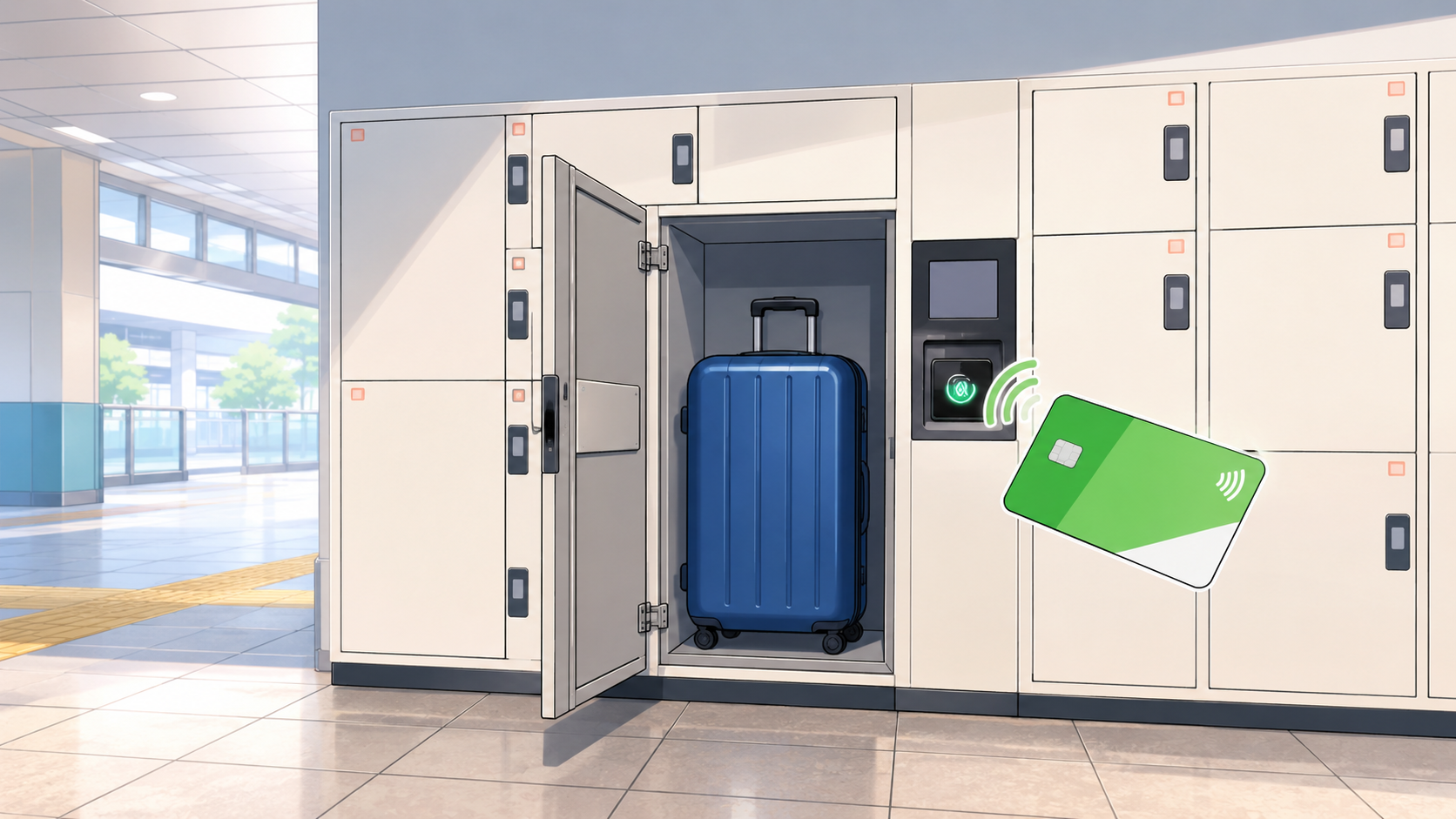
At a compatible machine, Suica or another supported transport IC card can be both the payment method and the electronic key. JR East’s Welcome Suica instructions describe this process:
- Place the bag inside and close the door.
- Select the IC card payment option on the screen.
- Tap the card on the reader to pay and lock the door.
- Take the printed receipt.
- When returning, select the retrieval option and tap the same card.
The exact sequence varies by machine. JR East also warns that cash and Suica cannot be combined for one locker payment. Make sure the card has enough balance before locking the door.
3. PIN- or QR-code lockers
Some newer lockers issue a paper receipt containing a locker number, PIN, barcode, or QR code. Others connect to a reservation website or smartphone service.
Keep the receipt private and dry. Do not leave it beside the locker or photograph it publicly. Anyone with the retrieval code may be able to open the compartment.
Can you use Suica, PASMO, or Apple Wallet?
You can use Suica at lockers that display the compatible IC card symbol. JR East confirms that Welcome Suica can be used as both payment and the key at supported lockers. Other mutually compatible transport IC cards may also work when their marks are displayed.
Mobile Suica and Apple Pay Suica can be used with compatible equipment, but remember that the same device and Suica identity may be needed to unlock the door. If the phone malfunctions, is replaced, or the Suica ID changes, the locker may not recognize it. JR East instructs users in that situation to contact the management company shown on the locker.
To reduce risk:
- Charge your phone before using it as a locker key.
- Do not remove, transfer, or reissue that Suica while the locker is in use.
- Keep the printed receipt, even when you paid by phone.
- Photograph the management contact details separately.
- Use the same physical card or device when retrieving the bag.
For a wider explanation of transport cards, see our separate guide to using Suica in Japan.
How long can you leave luggage in a coin locker?
At many railway-operated lockers, the maximum is three consecutive days including the first day. This is not a universal rule for every airport, shopping center, or private locker.
If you exceed the maximum period, staff may remove the bag and transfer it to a separate storage location. You may need to show identification, pay accumulated fees, and collect it during limited service hours. Items left beyond the operator’s final storage deadline may be disposed of under the applicable terms.
Coin lockers are designed for temporary storage, not for leaving luggage while you travel to another city for a week.
Can you open the locker more than once?
With a standard coin locker, opening the door normally ends the rental. If you want to store the bag again, you may need to pay a new charge.
Some newer services offer a special one-day multiple-access option, but only use it when the screen or reservation terms clearly say repeated opening is included. Multi-Ecube, for example, defines a specific “one-day free opening and closing” service separate from ordinary locker use.
Where are coin lockers located?
Common locations include:
- Near station ticket gates
- Inside or outside paid train areas
- Underground passageways
- Station shopping areas
- Airport arrival and departure floors
- Bus terminals
- Department stores and tourist facilities
Major stations can have several railway companies, multiple floors, and many exits. “At Shinjuku Station” is not enough information to find your bag again.
Before leaving, photograph:
- The locker number
- The entire locker bank
- The nearest gate or exit name
- The floor level
- The railway company
- The receipt and contact number
Also check whether the locker is inside the ticket gates. You may need a valid fare or station-entry procedure to return to it.
What time can you access a station locker?
A locker inside a railway station is not necessarily accessible 24 hours a day. Many station lockers can be used only between the first and last trains. Lockers inside shopping centers, station buildings, or underground passages may follow the building’s shorter hours.
If you have an early flight or late-night bus, confirm access hours before storing the bag. A locker can still contain your luggage while the surrounding facility is closed, but you may be unable to reach it.
What should you never store in a coin locker?
Exact prohibited-item lists vary, but railway locker terms commonly exclude:
- Cash, bank cards, passports, securities, jewelry, and other valuables
- Medication or documents you cannot afford to lose
- Dangerous, explosive, flammable, volatile, or toxic materials
- Illegal items and weapons
- Animals
- Food or other items likely to spoil, leak, smell, or attract pests
- Fragile items
- Items that are too heavy or may damage the locker
Do not assume the operator will reimburse the full value if something goes wrong. Liability limits and exclusions apply. Carry your passport, money, medication, electronics, keys, and essential travel documents with you.
What to do when every locker is full
Large lockers at Tokyo, Shinjuku, Kyoto, Osaka, and other busy stations can fill early—especially on weekends, holidays, and during cherry-blossom or autumn-leaf seasons.
Try these options in order:
- Check another floor or gate. The most visible lockers near the main exit fill first.
- Look outside the ticket gates. Station buildings and underground passages may have separate locker banks.
- Check another railway operator. A JR station and nearby subway station may have different lockers.
- Use a nearby smaller station. One stop away may be easier, but confirm that returning is convenient.
- Search or reserve a compatible smart locker. Multi-Ecube shows availability at participating locations and allows reservations where offered. A ¥500-per-box reservation fee applies.
- Use a staffed luggage counter. Tourist information centers, station service counters, and commercial storage services may accept bags.
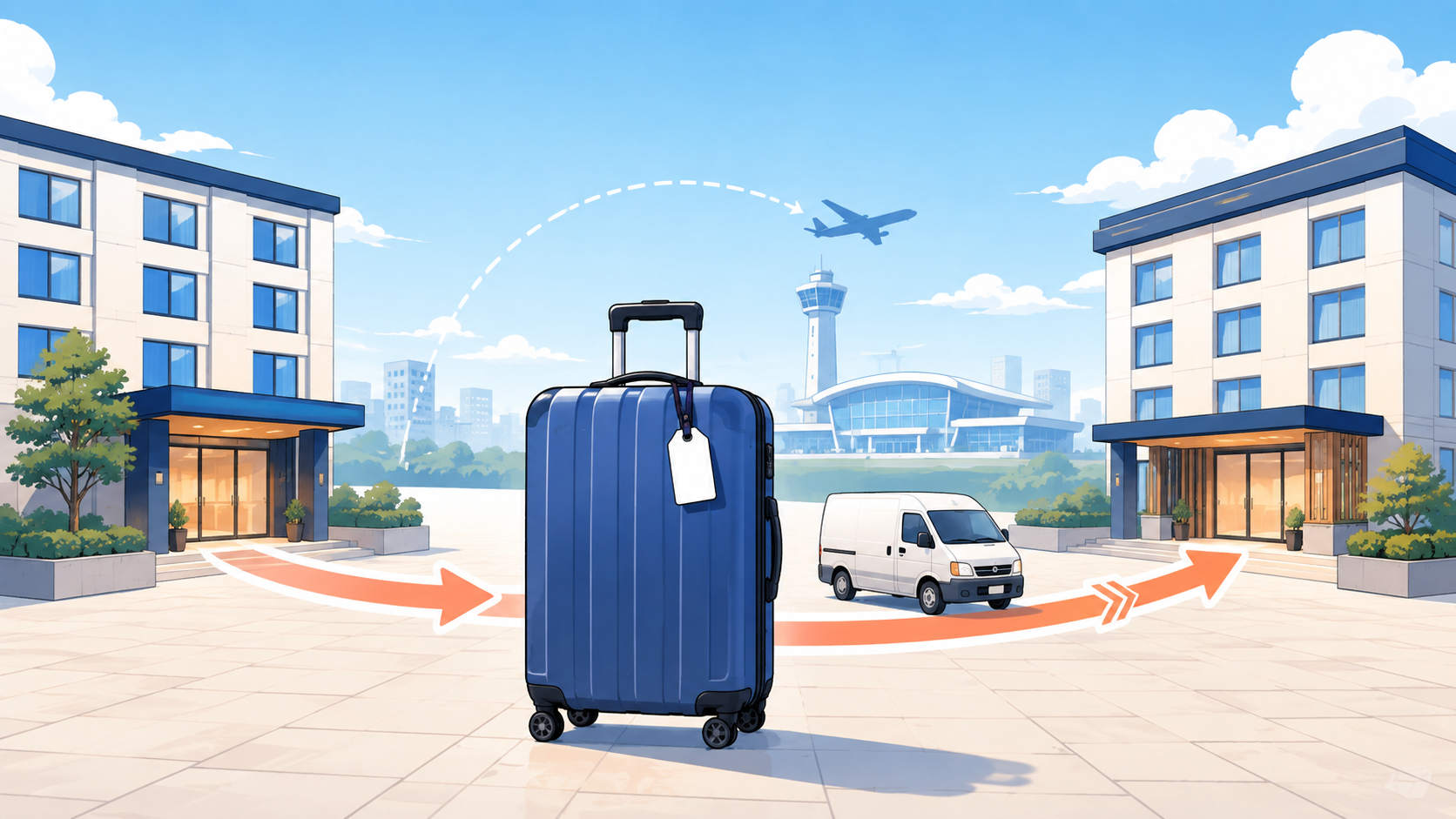
- Ask your hotel. Many accommodations hold luggage for guests before check-in or after checkout, subject to their policy.
- Forward the suitcase. If you do not need it the same day, delivery may be easier than searching for a locker.
See our Japan luggage forwarding guide for hotel-to-hotel and airport delivery options.
If you plan to take your suitcase onto a bullet train instead, check our Shinkansen luggage rules guide before boarding, because oversized baggage may require a reservation on some routes.
A practical note from Sho: From my experience working in accommodation operations, travelers sometimes pay for a station locker before checking whether their hotel can hold the bag. If you are checking in that day—or have just checked out—ask the hotel first. Its storage policy may be simpler and may save you a return trip to a complicated station.
What if you lose the key, receipt, IC card, or phone?
Contact the locker management company immediately using the information printed on the locker or receipt. Station staff may point you in the right direction, but the station itself may not operate the locker.
You may be asked for:
- Photo identification
- The locker location and number
- A detailed description of the bag and its contents
- The approximate time of storage
- Payment of an unlocking or key-replacement charge
Assistance may not be available immediately or outside the management center’s hours. This is another reason not to store a passport, flight documents, or urgently needed medication.
Common mistakes to avoid
- Forgetting the location: Save the gate, floor, railway company, and locker number.
- Assuming the rental lasts 24 hours: An extra charge may begin at 2:00 a.m. or another posted time.
- Using a locker inside the wrong ticketed area: Make sure you can return to it.
- Returning after the building closes: Check access hours, not just train times.
- Throwing away the receipt: It contains the location and support details.
- Using a nearly empty phone as the key: Charge it and keep the receipt.
- Opening the door to retrieve one item: Standard locker use may end immediately.
- Forcing an oversized suitcase: Use a larger locker or staffed counter.
- Storing valuables: Keep passports, cash, cards, and essential medicine with you.
Frequently asked questions
Can a full-size checked suitcase fit in a Japan coin locker?
Often in a large or extra-large locker, but not always. Suitcase dimensions and locker measurements vary. Large lockers are also the first to fill, so have a backup plan.
Can I leave luggage overnight?
Usually, if the locker permits multi-day use and you remain within its maximum period. Expect an additional charge at the operator’s daily cutoff time. You may not be able to access the locker while the station or building is closed.
Can I pay with a credit card?
Some newer lockers accept additional cashless methods, but many accept only coins or transport IC cards. Check the payment symbols before placing your bag inside.
Can I reserve a coin locker?
Some smart lockers can be reserved online, but most traditional station lockers cannot. Multi-Ecube offers availability searches and reservations at participating locations, generally from one month before the use date. Reservation fees apply.
Are coin lockers safe?
They are widely used for ordinary luggage, but no storage system is risk-free. Follow the operator’s terms, lock the door correctly, keep the key or code private, and never leave valuables or irreplaceable items inside.
What happens if I leave the bag too long?
The operator may remove it and hold it at another location while additional fees accumulate. After the stated final storage period, the item may be treated as abandoned and disposed of according to the terms.
Final checklist
- Confirm the bag fits without forcing it.
- Read the displayed price and daily cutoff time.
- Check the maximum storage period.
- Confirm you can access the locker when returning.
- Use the same IC card or device for retrieval.
- Keep the key, receipt, PIN, or QR code secure.
- Photograph the locker number, floor, gate, and railway company.
- Carry your passport, wallet, medication, and tickets.
- Have a staffed counter, hotel, or forwarding service as a backup.
Japan’s coin lockers are convenient when you use them for what they are designed for: short-term storage of ordinary luggage. Check the machine before paying, save the exact location, and plan an alternative before arriving at the busiest stations.
Official sources
- Japan National Tourism Organization: Luggage & Storage
- JR East: Welcome Suica and coin locker instructions
- JRE Media: Shinjuku Station locker prices, locations, and reservations
- Multi-Ecube: Locker availability and reservations
- JR East Smart Logistics: Multi-Ecube reservation terms
- Tokyu Railways: Official coin locker terms
- Mobile Suica FAQ: When a Suica-locked locker will not open