Last fact-checked: September 7, 2026. Check-out times, late fees, luggage storage, and payment procedures vary by property and booking plan. Always confirm the details in your own reservation.
Quick answer: Most hotels in Japan set a specific check-out deadline—often 10:00 or 11:00 a.m.—but there is no single time used by every property. Return the key or complete the hotel’s stated check-out process, settle any remaining charges, and remove all belongings before the deadline. Many staffed hotels can store luggage for the rest of the same day, but this is a property service rather than a nationwide guarantee. If you need a late check-out, ask before the deadline; availability and fees vary.
Checking out of a Japanese hotel is usually fast. In a prepaid business hotel, you may only need to insert a key card into a machine. At a ryokan, you may settle drinks and other charges at reception. At an unstaffed property, you may need to use an app, return a key to a lockbox, or follow instructions sent by email.
The difficult part is not the word “check-out.” It is knowing whether your bags can stay, whether the room is fully paid, and what happens if you are ten minutes late. This guide explains the whole departure process from the viewpoint of someone who works in accommodation management in Tokyo.
The five things to confirm before sleeping on your final night
- Your exact check-out deadline
- How and where to return the room key
- Whether any payment remains
- Whether the property will store luggage after check-out
- How long you need to reach the station or airport
- What Time Is Hotel Check-Out in Japan?
- Do You Have to Visit the Front Desk?
- The Night-Before Check-Out Checklist
- What to Check Before Leaving the Room
- Final Payments, Deposits, and Receipts
- Can You Get a Late Check-Out in Japan?
- Can a Japanese Hotel Store Luggage After Check-Out?
- Sending Luggage to the Next Hotel or Airport
- Early-Morning and Unstaffed Check-Out
- Checking Out of a Ryokan
- What If You Leave Something Behind?
- A Note From Sho: Why the Deadline Matters
- Useful Japanese Phrases for Check-Out
- Common Check-Out Mistakes
- Frequently Asked Questions
- Final Check-Out Plan
- Official Sources
What Time Is Hotel Check-Out in Japan?
A 10:00 or 11:00 a.m. check-out is common at Japanese hotels, but neither time is a national rule. Resorts, luxury hotels, ryokan, hostels, capsule hotels, apartment hotels, and vacation rentals can use different deadlines. A membership benefit or special booking plan may also change the time.
The time shown on your confirmation is the one that matters. Check the hotel’s official website and your booking details instead of relying on a general travel article—including this one. If two pages show different times, contact the property and keep its reply.
“Check-out by 10:00” normally means that you should have removed your belongings from the room and completed the required return procedure by 10:00. It does not mean you should begin packing at 10:00.
| Accommodation type | What to expect | What to verify |
|---|---|---|
| Business or city hotel | Reception, kiosk, or key-card return box | Deadline, unpaid charges, luggage storage |
| Ryokan | Front-desk settlement is common | Meal or drink charges, shuttle time, footwear and key return |
| Hostel or small lodging | Reception or a designated key box | Reception hours and storage availability |
| Unstaffed hotel or vacation rental | App, online form, lockbox, or message | Exact digital procedure and garbage instructions |
| Resort or luxury hotel | Front desk, express check-out, or in-app process | Incidentals, deposits, late check-out benefits |
Do You Have to Visit the Front Desk?
Not always. The correct method depends on the hotel.
- Front-desk check-out: Return the key and settle the final bill with staff.
- Automatic machine: Insert the key card and follow the on-screen instructions.
- Express check-out box: Drop the key card into a marked box when no payment remains.
- Automatic check-out: Some hotels require no front-desk stop if the room is prepaid and there are no extra charges.
- Digital check-out: An app, website, tablet, or message confirms departure.
- Lockbox return: Small or unstaffed properties may require you to return a physical key to a specified box.
Do not copy what another guest does. That guest may be on a different plan, may have already paid, or may be using a membership benefit. Follow the instructions given at check-in, printed in the room, or shown in your confirmation.
Can you simply leave the key card in the room?
Only if the property says you can. Some disposable key cards do not need to be returned, but many hotels reuse their cards or require them for check-out. Traditional metal keys, room-key holders, physical access tags, and borrowed items should never be left behind without instructions.
If you are in a hurry and cannot find the procedure, call or message the property. Quietly disappearing with the key creates more work for staff and may result in a replacement charge.
The Night-Before Check-Out Checklist
The calmest check-out begins the night before. Japanese hotel rooms can be compact, so small belongings easily disappear behind curtains, under beds, or between the wall and a suitcase.
- Confirm the deadline and set two alarms.
- Check your train, airport bus, or flight departure time.
- Pack everything you will not need in the morning.
- Charge your phone and portable battery.
- Put passports, wallets, medicine, and tickets in your day bag.
- Ask about luggage storage or forwarding while reception is still open.
- Check whether breakfast ends well before check-out.
- Request a receipt if you need one for work or reimbursement.
If the next day includes a Shinkansen, do not assume you can take every suitcase into any seat area. Review our Shinkansen luggage rules guide before departure, especially when a bag’s three dimensions total more than 160 centimeters.
What to Check Before Leaving the Room
Use the same route around the room every time. Start at the door and move clockwise so you do not repeatedly check the bed while forgetting the refrigerator.
- Room safe
- Refrigerator and freezer compartment
- Bathroom shelves and shower area
- Closet, hangers, and luggage rack
- Under the bed and between mattresses and walls
- Desk drawers and bedside shelves
- Electrical outlets, USB ports, and charging cables
- Shared laundry machines or drying areas
- Balcony, shoe cabinet, or entryway
Open the safe even if you are certain it is empty. Passports are remarkably talented at hiding five minutes before an airport train.
Do you need to clean the room?
You do not need to make the bed, wash hotel towels, or perform professional cleaning. Normal room cleaning is part of the accommodation service. However, put garbage in the provided bins, return furniture to a reasonable position, and do not leave an avoidable mess.
At a vacation rental or apartment-style property, the host may provide specific garbage, dishwashing, key, or air-conditioner instructions. Follow the written rules, but check the booking terms if a last-minute demand goes beyond what was disclosed.
What can you take from the room?
Individually packaged toiletries, tea bags, coffee, and other items clearly presented as complimentary are generally intended for guest use. Reusable towels, sleepwear, hair dryers, kettles, tableware, adapters, baskets, and decorations belong to the property. If an item is not clearly disposable, ask.
Borrowed chargers, irons, children’s items, umbrellas, public-bath keys, and other rental equipment should be returned before check-out. Staff may need time to inspect or record the return.
Final Payments, Deposits, and Receipts
A “prepaid” reservation may cover the room while leaving other charges unpaid. Depending on the property and your stay, the final bill can include:
- Restaurant, bar, minibar, or room-service charges
- Breakfast or dinner added after booking
- Local accommodation tax not collected by the booking platform
- Laundry, parking, massage, or rental-item charges
- Room upgrades or an additional guest
- Late check-out or damage charges
Some hotels collect everything at check-in; others settle incidentals at departure. If you need to catch an early train, ask to review and pay the bill the previous evening. This is particularly useful for groups, long stays, and ryokan plans with drinks charged to the room.
Keep a physical card and some Japanese yen available even if you normally use a phone wallet. Our Cash vs Card in Japan guide explains payment backups, foreign cards, ATMs, and IC cards.
How do receipts work with online bookings?
The company that collected the payment is often the company that issues the receipt. If an online travel agency charged your card, its electronic receipt may be the official payment record. The hotel may be able to issue a receipt only for amounts collected directly at the property.
If you need a specific name or company format, ask before payment. A hotel may also provide a certificate of stay, but that document confirms accommodation and is not necessarily a receipt.
What happens to a security deposit?
If the hotel placed a temporary authorization on a credit card, the release may not appear immediately after check-out. The property can release its hold, but the time until your available balance changes may depend on the card issuer and network. Keep the final statement and contact the hotel first if the charged amount itself is incorrect.
Can You Get a Late Check-Out in Japan?
Sometimes, but never assume it. Late check-out depends on room availability, housekeeping schedules, the next guest’s arrival, membership status, and the booking plan. It may be free, charged by the hour, sold as an add-on, or unavailable.
Ask the front desk the evening before departure or early that morning. If keeping the room is essential—for example, because of remote work, a child’s nap, or medical needs—arrange it before the trip or book an additional night. A casual request at the deadline is not a reliable plan.
A real policy example, not a rule for all Japan: Toyoko Inn’s official guide currently lists 10:00 a.m. check-out and, when rooms are available, a ¥1,000-per-hour late fee until 2:00 p.m.; after 2:00 p.m., it lists the full nightly accommodation fee. Other hotels use different times, prices, and conditions.
What if you oversleep or miss the deadline?
Contact the front desk immediately. Do not ignore calls or continue using the room while hoping nobody notices. Explain how quickly you can leave and ask whether a late fee applies.
The room must be cleaned and inspected before the next guest arrives. Even a short delay can affect housekeeping and incoming travelers. A polite call will not erase every fee, but it gives staff a chance to adjust the schedule.
Can a Japanese Hotel Store Luggage After Check-Out?
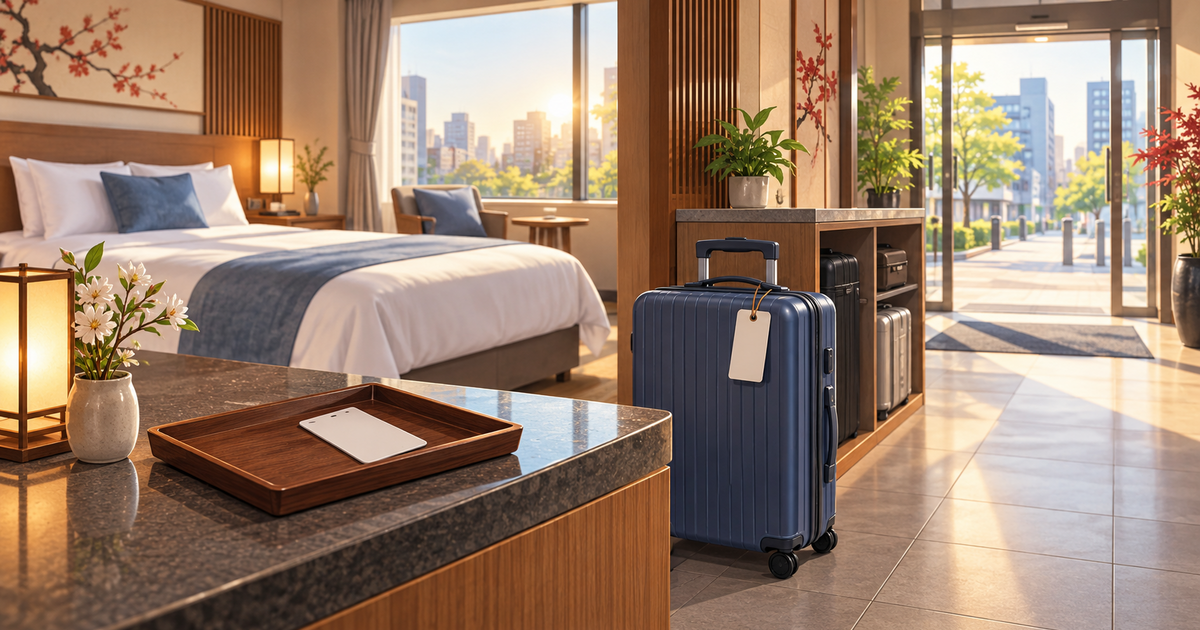
Many staffed hotels will hold luggage for registered guests after check-out, usually for collection later that same day. However, storage is not guaranteed. An unstaffed property, small hostel, capsule hotel, or hotel with limited secure space may not offer it.
Ask before leaving the room:
- Can you store my luggage after check-out?
- Is storage free?
- What is the latest collection time?
- Where do I collect it?
- Do I need a claim tag or reservation confirmation?
Official policies show why checking matters. APA Hotels states that baggage can be kept free on the day of check-in or check-out. Mitsui Garden Hotel Toyosu Premier states that luggage can be stored before check-in and after check-out on the same day, while excluding valuables, food, hazardous items, and refrigerated or frozen goods. Toyoko Inn’s self-cloakroom terms also limit post-check-out use to the check-out day and set facility-specific operating conditions.
These examples show a common pattern, not a promise from every hotel in each chain. Confirm the individual property’s current policy.
What should stay with you?
Keep the following in your day bag:
- Passport and other identification
- Cash, cards, and valuables
- Medicine and medical devices
- Electronics, batteries, and fragile items
- Train tickets and flight documents
- Anything needed before you return
Hotels commonly refuse dangerous goods, food that can spoil, refrigerated or frozen items, and items that are difficult to secure. Oversized sports equipment, wet umbrellas, strollers, musical instruments, and expensive electronics may need individual approval.
Can the hotel keep bags for several days?
Do not assume so, even if you will return to the same hotel later. Many same-day services are not long-term storage. Space, insurance, security, and staffing make multi-day storage a different request.
If you need to travel lightly between cities, forwarding the suitcase to your next accommodation is often more practical. Our Japan luggage forwarding guide explains hotel acceptance, shipping forms, delivery timing, restricted items, and airport services.
For storage lasting only a few hours, see our Japan coin locker guide. Large station lockers can fill early, so do not wait until your train is about to leave before looking for one.
Sending Luggage to the Next Hotel or Airport
Ask reception whether the hotel can arrange a courier shipment. The next property must be able to receive it, and the name on the shipping slip should match the reservation. Write the next check-in date and a reachable phone number when requested.
Delivery is not always same-day. Routes, weather, cutoff times, remote areas, and airport security procedures affect timing. Send bags early enough and carry at least one change of clothes, medicine, chargers, documents, and valuables with you.
If you are flying, confirm the courier’s airport deadline and the correct terminal pickup counter. “Sending it to Haneda” is not enough when your flight leaves before the suitcase is available.
Early-Morning and Unstaffed Check-Out
If you plan to leave before reception opens, tell the property during check-in. Settle the bill in advance and ask exactly where to return the key. A locked or unstaffed lobby can turn a simple departure into a small escape-room challenge—less entertaining when an airport bus is waiting.
Save the following offline:
- Door-exit instructions
- Key-return location
- Emergency or support telephone number
- Taxi pickup point or station route
- Proof that the room has been paid
Do not leave a physical key in an unlocked public place unless instructed. At an apartment or vacation rental, take a photo showing that the key was returned correctly if the system is unattended.
Checking Out of a Ryokan
Ryokan departures can involve more front-desk interaction than an express business hotel. Drinks ordered at dinner, private-bath reservations, shop purchases, or other services may be added to the room bill. Allow extra time, especially when several groups are leaving after breakfast.
Return the room key, borrowed items, and any footwear or property equipment as directed. You do not need to fold the futon professionally or tip staff. A sincere “arigatō gozaimashita” is enough.
If the ryokan offers a station shuttle, its departure time may be earlier than the room deadline. Confirm it the previous day. For meal timing, baths, futons, and service differences, read our Ryokan vs Hotel in Japan guide.
What If You Leave Something Behind?
Contact the property as soon as possible. Provide:
- Reservation name and booking number
- Stay dates and room number, if known
- A precise description of the item
- Where you last saw it
- Your current hotel, Japanese address, and phone number
“A black charger” may match several items. “A black 65-watt USB-C charger with two ports, left in the outlet beside the desk” is much easier to identify.
The hotel may be able to send an item within Japan at your expense. International shipping can be difficult or unavailable because of payment, customs, batteries, liquids, food, and courier restrictions. Medicines and identification documents may require special handling. Ask what the property can do rather than sending a courier without permission.
A Note From Sho: Why the Deadline Matters
I manage an accommodation property in Tokyo, and most check-outs take only a minute. The guests who make departure easiest are not the ones who speak perfect Japanese. They are the ones who know their deadline, bring the key, and mention luggage or receipt requests before the last moment.
From the guest side, ten extra minutes may not feel serious. From the property side, that room may have to be inspected, cleaned, repaired if necessary, and prepared for someone arriving a few hours later. One delayed room can affect housekeeping and the next guest.
If you need more time, ask. If you have overslept, call. If you are unsure whether a charge remains, visit reception. Clear communication solves more problems than quietly hoping the hotel will guess your plan.
Useful Japanese Phrases for Check-Out
| Japanese | Meaning | When to use it |
|---|---|---|
| Chekku-auto o onegaishimasu. | I’d like to check out. | At reception |
| Tsūika no shiharai wa arimasu ka? | Are there any additional charges? | Confirming the bill |
| Ryōshūsho o onegaishimasu. | May I have a receipt? | After payment |
| Nimotsu o azukatte moraemasu ka? | Can you store my luggage? | Requesting storage |
| Nanji made azukatte moraemasu ka? | Until what time can you keep it? | Confirming pickup time |
| Chekku-auto o enchō dekimasu ka? | Can I extend my check-out time? | Requesting late check-out |
| Kagi wa doko ni kaeshimasu ka? | Where should I return the key? | Early or unstaffed departure |
| Wasuremono o shimashita. | I left something behind. | Reporting a lost item |
You can also show staff the English sentence on your phone. The reservation name, room number, pickup time, and destination matter more than perfect pronunciation.
Common Check-Out Mistakes
- Assuming every hotel checks out at 11:00 a.m.
- Starting to pack at the check-out deadline
- Leaving without returning a physical key or borrowed item
- Assuming a prepaid booking includes every tax and incidental charge
- Requesting late check-out only after the deadline
- Leaving luggage without confirming the pickup time
- Putting passports, medicine, or flight documents into stored luggage
- Expecting the hotel to keep bags for several days
- Sending luggage to the airport too late
- Forgetting the safe, refrigerator, laundry machine, or charging cable
Frequently Asked Questions
Is hotel check-out in Japan usually at 10:00 or 11:00?
Both are common, but the correct time is the one stated by your hotel and booking plan. Some properties use another deadline or offer a later time through a membership or special package.
Can I leave without speaking to the front desk?
Yes, when the hotel provides express, automatic, digital, or unattended check-out and no payment remains. Otherwise, return the key and complete the front-desk procedure. Never assume that leaving the card in the room is acceptable.
Will a hotel in Japan store luggage after check-out?
Many staffed hotels offer same-day storage, sometimes free, but not all do. Ask whether storage is available, which items are excluded, and the latest collection time. Unstaffed properties and small accommodations may have no secure storage.
Is late check-out free in Japan?
Not necessarily. It may be complimentary, a membership benefit, charged by the hour, or unavailable. Approval depends on the property, booking plan, occupancy, and housekeeping schedule.
What happens if I check out late?
The hotel may charge a late fee or, after a stated time, an additional night. Contact the property immediately if you are delayed. Do not assume there is a free grace period.
Should I tip hotel staff at check-out?
Tipping is not normally expected at Japanese hotels. Pay the stated bill and thank the staff. Some traditional properties use a service charge or have specific customs, but you do not need to add an American-style percentage at the desk.
Can I ask for a receipt if I paid online?
Ask the company that collected the payment. An online travel agency may issue the room receipt, while the hotel can issue receipts for charges paid directly to it. A certificate of stay is a separate document.
Final Check-Out Plan
- The night before: Confirm the deadline, transport, bill, storage, and key-return method.
- Before breakfast: Pack most belongings and place valuables in your day bag.
- Before leaving the room: Check the safe, refrigerator, bathroom, outlets, bed, and laundry.
- At check-out: Return the key, settle charges, request documents, and ask for a luggage claim tag.
- After check-out: Keep the pickup deadline in your phone and allow enough time for the station or airport.
If you are still preparing for arrival, our Japan hotel check-in guide covers passports, payment timing, late arrivals, and self-check-in. Together, the two guides cover the stay from the first front-desk conversation to the final key return.
Official Sources
- Toyoko Inn: Official Guide, Check-Out Times and Late Fees
- Toyoko Inn: Terms and Conditions for Use of Self-Cloakroom
- APA Hotels & Resorts: Official Luggage Storage FAQ
- Mitsui Garden Hotel Toyosu Premier: Luggage Storage Information
- Mitsui Garden Hotels: Official Frequently Asked Questions
- Japan National Tourism Organization: Luggage and Storage
- Yamato Transport: Hands-Free Travel
This guide provides general travel information. Individual hotels, ryokan, hostels, and vacation rentals may use different check-out times, fees, storage limits, and payment procedures. Confirm your own reservation before departure.