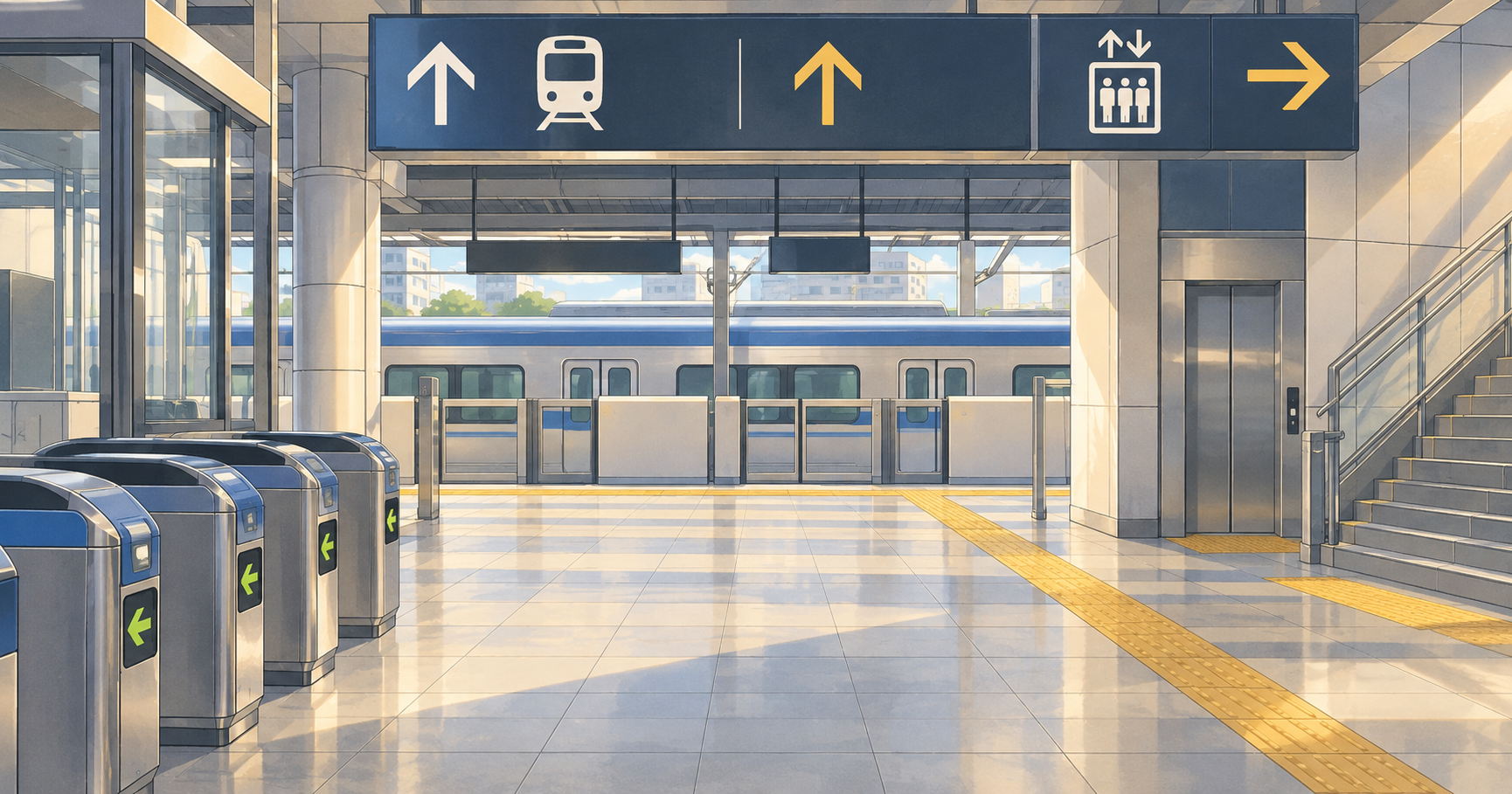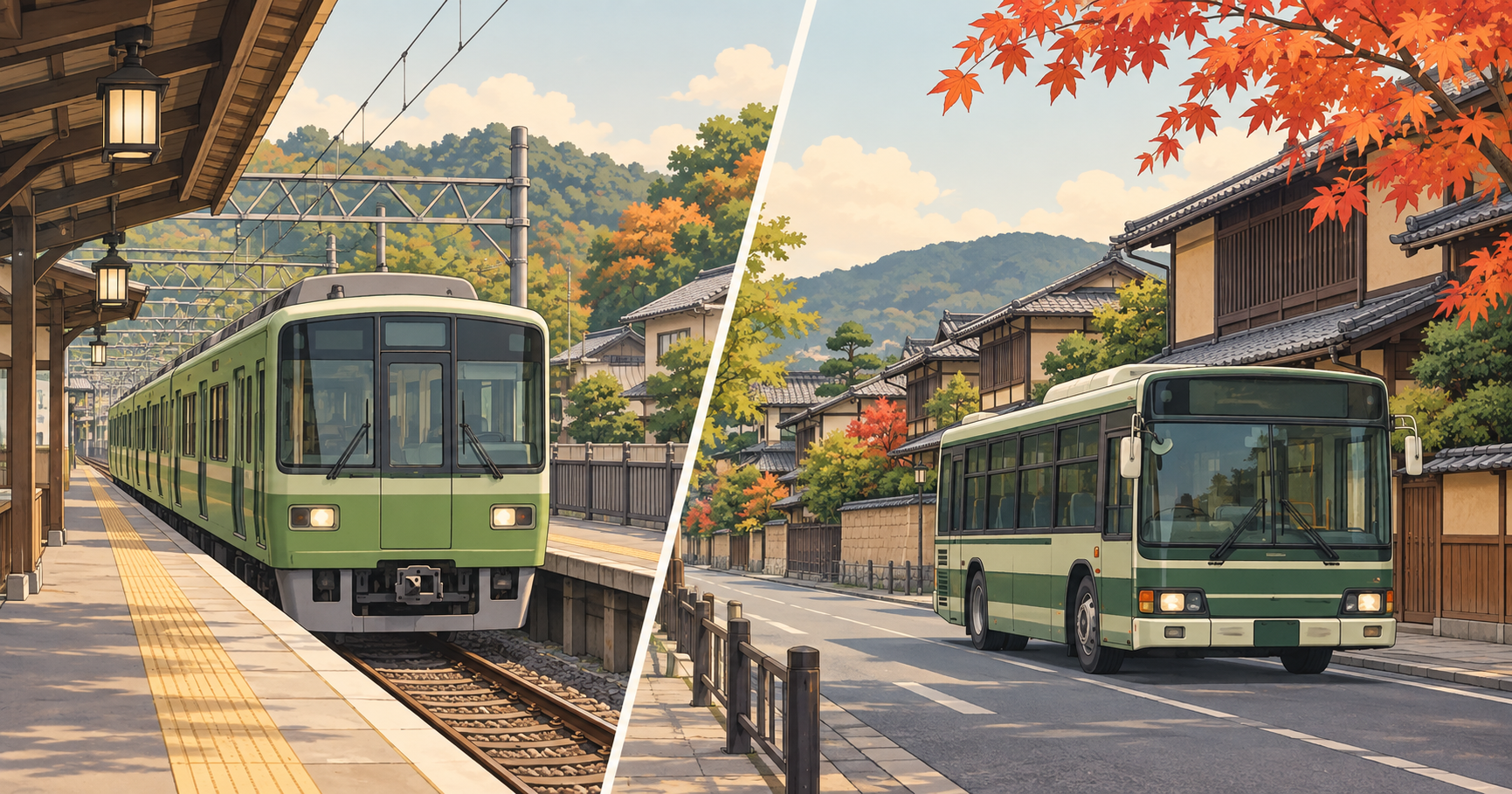
Quick answer: The easiest way to get around Kyoto is to choose transport for each destination: use trains or the subway for the main part of the journey when practical, then walk or take a short bus ride. Before joining a long bus queue, compare a rail connection. Leave large luggage at your accommodation or a storage service before sightseeing.
Kyoto does not require you to master every railway and bus route. A better starting point is to group nearby sights, identify the nearest useful station, and keep one alternative route ready. This guide helps you make those decisions without assuming that every journey should begin with a bus from Kyoto Station.
Official information checked September 13, 2026. Fares, service days, temporary stops, and timetables can change. Route examples below are planning options, not live departure instructions.
- Train, subway, bus, taxi, or walking?
- Four popular destinations: which route should you consider?
- Can you use Suica in Kyoto?
- How to board and pay on Kyoto buses
- Is the Subway & Bus 1-Day Pass worth buying?
- What to do when the bus queue is too long
- Use Kyoto’s official congestion tools
- Build a manageable sightseeing day
- What should you do with luggage?
- Small details that prevent bigger problems
- Frequently asked questions
Train, subway, bus, taxi, or walking?
| Transport | Useful when | What to check |
|---|---|---|
| Train | A railway connects your starting point and destination area. | The operator, stopping pattern, station exit, and final walk. |
| Subway | You want to cross part of the city without relying on surface traffic. | Whether the destination requires another connection. |
| Bus | The attraction is beyond the convenient rail network. | The exact stop, direction, operator, fare, and boarding procedure. |
| Taxi | A short final connection would reduce difficult walking or transfers. | Vehicle capacity, luggage space, pickup arrangements, and likely traffic. |
| Walking | Your next stop is nearby and the route suits your mobility and weather. | The full distance, slopes, sidewalks, and time on your feet. |
Kyoto’s official transport guide encourages combining trains and buses and traveling without bulky luggage. This is a useful starting principle, rather than a promise that trains will always be empty or every connection will be faster.
My recommendation is to compare total effort as well as minutes. A route with two unfamiliar transfers can be less attractive than a slightly slower direct journey, especially after a long flight or with children.
Four popular destinations: which route should you consider?
The examples below start at Kyoto Station. If your hotel is elsewhere, search from its actual address: returning to Kyoto Station first may create an unnecessary detour.
| Destination | Route to consider | Important detail |
|---|---|---|
| Fushimi Inari Taisha | JR Nara Line to Inari Station | Confirm that your chosen departure stops at Inari. |
| Arashiyama | JR Sagano Line to Saga-Arashiyama Station, then walk | The railway station and your exact attraction are not the same destination. |
| Kiyomizu-dera | JR to Tofukuji, then Keihan to Kiyomizu-Gojo, then walk | The final approach is substantial and uphill. |
| Kinkaku-ji | Karasuma Subway Line to Kitaoji, then a suitable bus | Confirm the departure bay and direction at Kitaoji. |
Fushimi Inari: check the train, then the station name
From Kyoto Station, the JR Nara Line provides access to JR Inari Station near the shrine approach. Check the current departure display for the stopping pattern rather than choosing a train simply because it is on the Nara Line.
Keihan’s Fushimi-Inari Station is a different station. A route from the eastern side of central Kyoto may use Keihan instead, so keep the operator attached to the station name in your notes. See the official Fushimi Inari access guide.
For your return, search from where you finish sightseeing. You do not have to retrace the morning journey if your next destination is in another part of the city.
Arashiyama: plan beyond Saga-Arashiyama Station
Kyoto’s official advice identifies the JR Sagano Line as a convenient option from Kyoto Station. It also notes that reaching its platform within Kyoto Station involves a longer walk than some other lines. Allow station-navigation time before the departure you intend to catch.
After arriving at Saga-Arashiyama, you still need to walk to your chosen attraction. Save the entrance to the temple, garden, or other place you intend to visit, rather than a general pin for “Arashiyama.” The official Arashiyama access page describes the approach.
My planning suggestion is to keep this part of the day geographically compact. Adding another nearby stop can make more sense than immediately crossing Kyoto again to collect a second famous photograph.
Kiyomizu-dera: include the uphill walk in your decision
One option is JR from Kyoto Station to Tofukuji, then Keihan to Kiyomizu-Gojo. Kyoto’s official guide puts the walk from Kiyomizu-Gojo at approximately 25 minutes. Your own pace, crowds, breaks, and the uphill approach may increase that.
The city also lists express sightseeing buses EX100 and EX101 on weekends and holidays, including access to Gojo-zaka, at an adult fare of ¥500. Check the current service calendar and stop information before planning around one. See official Kiyomizu-dera access options.
Do not choose the rail-and-walk option solely because it avoids a bus queue. If the walk is difficult for someone in your group, compare bus or taxi access and the walking still required after getting out. Getting closer is not the same as arriving at a step-free entrance.
Kinkaku-ji: use rail for part of the journey
Kyoto’s destination guide recommends the Karasuma Subway Line to Kitaoji, followed by a bus toward Kinkaku-ji. It lists routes 204 and 205 as options and Kinkakuji-michi as the stop for the final walk. Confirm the correct direction and boarding bay on the day.
Check the official Kinkaku-ji access guide for the connection. A bus number alone is not a complete instruction: a service in the opposite direction can produce a long detour.
This is an example of reducing the road portion of a journey, not eliminating it. Leave room in your schedule for the bus connection and the temple’s admission cutoff.
Can you use Suica in Kyoto?
Suica is useful on participating railways and buses in Kyoto; you do not need to change cards just because you have traveled from Tokyo. However, always check acceptance for the particular service. Stored-value IC payment is different from a sightseeing pass and does not automatically include every special service.
For card choices, top-ups, and common errors, see our Suica guide for tourists. Before heading out, check your balance and keep a backup payment method.
Kyoto Bus, a separate company from Kyoto City Bus, explicitly lists Suica among its accepted nationwide IC cards. Its fare page also distinguishes routes where you tap only when leaving from distance-based routes where you tap both when boarding and leaving.
That difference matters more than memorizing the color of the vehicle. Read the entrance instructions and identify the operator before assuming the payment procedure.
How to board and pay on Kyoto buses
There is more than one bus system in Kyoto. The usual city-bus procedure and the express sightseeing-bus procedure differ.
| Service | Boarding and payment | What matters |
|---|---|---|
| Ordinary Kyoto City Bus, flat-fare service | Generally board through the middle/rear entrance and pay when leaving at the front. | With an IC card, follow the reader instructions at the fare box. |
| Distance-based service | Follow the boarding record procedure and pay the applicable fare on exit. | IC users may need to tap at both entry and exit. |
| Express sightseeing bus | Board at the front and pay on entry; leave through the middle/rear door. | Different fare and service-day arrangements apply. |
Use the Kyoto City Bus riding guide and the signs on your actual bus. Ask the driver while the vehicle is safely stopped if you are unsure.
Do all Kyoto buses cost ¥230?
No. Kyoto’s official guide lists an adult fare of ¥230 for ordinary city buses within the flat-fare area and ¥500 for express sightseeing buses. Fares outside the flat-fare area and on other services can differ. Do not apply the standard city fare to every vehicle.
Do I need exact change?
Cash-handling equipment varies. Kyoto’s current visitor guidance says City Bus and West Japan JR Bus fare boxes can provide change for coins and ¥1,000 notes, while other buses may require using a change machine first. Carry smaller notes and check the equipment rather than assuming a ¥10,000 note will work. See the official bus guide.
Prepare your card or fare before reaching the front. If a payment problem occurs, let the driver help; do not hold up the queue while trying several unrelated cards without explaining what happened.
Is the Subway & Bus 1-Day Pass worth buying?
As checked on September 13, 2026, the Subway & Bus 1-Day Pass costs ¥1,100 for adults and ¥550 for children. It covers the municipal subway and city buses, plus specified services of other bus operators, with exclusions. It is not a pass for every railway in Kyoto.
The municipal Subway 1-Day Pass is listed separately at ¥800 for adults and ¥400 for children. Confirm current validity, coverage, and how to use the exact product you purchase on the official ticket comparison page.
Choose the itinerary first, then compare its covered fares with the pass price. For example, three ordinary ¥230 bus rides cost ¥690; those rides alone would not justify a ¥1,100 pass. Other included journeys or benefits might change the calculation.
If your day relies mainly on JR or Keihan trains, check those fares separately. Do not add unnecessary bus rides just to feel that you have used a pass enough.
What to do when the bus queue is too long
A queue is a reason to reassess, not automatically a reason to abandon the trip. Use this sequence:
- Confirm the queue. Check the route, direction, and boarding position. Nearby queues may be for different services.
- Search from your current location. Compare a rail route to the destination area, including the walk.
- Check your group. Can everyone manage the alternative’s stairs, distance, and weather?
- Protect timed plans. If you have a reservation, remove an optional stop instead of assuming the delay will disappear.
- Choose deliberately. Wait, use another verified connection, take a suitable taxi, or rearrange the visit.
My suggestion is to decide on a fallback before joining the queue. For example, agree that you will compare alternatives after a chosen waiting period. That avoids the frustrating feeling that you must keep waiting simply because you have already waited.
A taxi can help with a difficult final connection, but it still uses the road. Do not treat it as a guaranteed way around traffic. Confirm the destination and space for your group before committing to the ride.
Use Kyoto’s official congestion tools
Kyoto’s Maps & Tools page brings together the Kyoto Travel Congestion Forecast, live cameras, route-planning resources, and Kyoto Station Smart Navi. The station tool includes information about bus stops and luggage-storage facilities.
Use a forecast to compare when and where to go, and a camera to understand the place shown at that moment. Neither is a guarantee about your bus, every approach street, or the queue when you arrive.
A useful morning routine is to check your main destination, confirm its opening hours, and choose one optional nearby stop. If conditions are poor, move the optional stop or shorten the route. You can also consult the Arukumachi Kyoto route planner, linked by Kyoto’s official tourism site.
For September holidays and autumn visits, check current transport notices as well as the route search. Temporary stop changes can make an otherwise correct screenshot unhelpful. The Kyoto Municipal Transportation Bureau publishes current notices in Japanese; ask an information counter for help when a notice affects your route.
Build a manageable sightseeing day
Rather than connecting every famous name on one day, choose a main area and a realistic amount of walking. These are planning patterns, not fixed tours:
- Eastern Kyoto: choose one main temple visit and a nearby walk, checking slopes and opening hours.
- Arashiyama: keep the first part of the day in the area, with time for lunch and the walk back to your station.
- Fushimi Inari: decide how far you want to explore before adding another destination.
- Northern Kyoto: plan the rail-to-bus connection around your main visit instead of treating the area as a quick extra.
Keep your final activity optional. A satisfying day might include fewer sights, more time to understand one place, and an unhurried meal. The transport plan should make that possible.
If you start early, respect nearby residents: keep voices low and do not enter private lanes or closed grounds. An early arrival does not override opening hours or photography restrictions.
What should you do with luggage?
Arrange storage before heading toward a busy sightseeing route. Ask your accommodation whether it accepts bags before check-in or after check-out, and confirm the collection deadline.
If using a station facility, check whether it is inside or outside the ticket gates, the size limit, opening hours, and how you will retrieve your bag. Save a photo of the location and identifying number. Our coin locker guide explains what to check when lockers are full.
For transfers between cities or hotels, see our luggage-forwarding guide. Confirm acceptance and delivery timing with the receiving property; keep what you need overnight with you.
As a lodging facility manager, my practical recommendation is to settle the luggage plan before committing to the sightseeing plan. It changes which routes are comfortable and when you need to return.
Small details that prevent bigger problems
- Save the hotel’s exact address and the destination’s entrance, not only its English name.
- Check the return journey before staying late, including the last useful connection.
- Keep walkways, tactile paving, bus doors, and luggage access clear.
- Wait for the bus to stop before moving toward the exit.
- Offer priority seats to people who need them and keep phone calls off public transport.
- If separated, agree on a specific safe meeting point rather than rushing through closing doors.
For finding platforms, checking train direction, and choosing station exits, use our guide to navigating Japanese train stations. For everyday payment backup, read cash versus card in Japan.
Frequently asked questions
Should I avoid buses completely in Kyoto?
No. They are useful for destinations beyond convenient rail access. Compare the full journey and use the bus where it helps rather than making it the automatic choice for every trip.
Do I need an ICOCA if I already have Suica?
Usually not for participating services. Check acceptance and your balance; buying another card does not solve a route or boarding-procedure problem.
Can I visit Kyoto using only trains?
You can plan a rail-focused visit, but some attractions require significant walking or another connection. Choose sights and access routes that suit your group instead of forcing a train-only rule.
Does a day pass reserve a bus seat?
Do not assume so. Fare coverage and seat reservations are different. Check the conditions of any specific sightseeing service you book.
What is the best choice for a first visit?
Start with one main area, use a straightforward route, store bulky luggage, and keep a backup connection. Add complexity once you are comfortable with how the city fits together.
Before leaving your hotel: confirm the route, payment method, final walk, luggage arrangements, and return connection. Those five checks will make the day easier to adjust.
Written by Sho, a Japanese-born lodging facility manager in Tokyo, with practical planning advice for visitors to Japan.