Last fact-checked: August 27, 2026. Hotel facilities, breakfast service, bath access, room sizes, check-in times, child policies, prices, and membership benefits vary by property and booking plan. Confirm the exact hotel page before paying.
Quick answer: Choose APA Hotel when urban location and an efficient short stay matter most. Choose Toyoko Inn when you want a simple, predictable room and an included breakfast at many Japanese properties. Choose Dormy Inn when a large public bath and extra time relaxing at the hotel are worth paying more for.
There is no single winner for every traveler. The best chain is the one that solves your particular problem: getting close to a station, keeping breakfast costs under control, opening two suitcases, or recovering after walking 25,000 steps because the temple was “only a little farther.”
This comparison uses current information from the chains’ official websites and my perspective from working in lodging management in Japan. It is not based on pretending that every branch is identical—or that I have personally slept in every room in the country.
- APA Hotel vs Toyoko Inn vs Dormy Inn: Quick Comparison
- First, What Is a Japanese Business Hotel?
- APA Hotel: Best for Urban Convenience and Efficient Short Stays
- Toyoko Inn: Best for a Simple Routine and Breakfast Planning
- Dormy Inn: Best for Baths, Recovery, and a More Enjoyable Hotel Evening
- Which Chain Is Best by Traveler Type?
- Room Size and Luggage: The Brand Name Will Not Save You
- Breakfast: Included Does Not Always Mean Better
- Public Baths: Dormy Inn Usually Has the Strongest Case
- Location: Measure the Real Walk, Not the Marketing Walk
- Booking Direct vs an Online Travel Agency
- A Note From Sho: Choose the Problem You Want the Hotel to Solve
- Common Booking Mistakes
- Frequently Asked Questions
- Final Verdict
- Official and Primary Sources
APA Hotel vs Toyoko Inn vs Dormy Inn: Quick Comparison
| Hotel chain | Best for | Typical strengths | Check carefully |
|---|---|---|---|
| APA Hotel | Short urban stays and location-focused travelers | Many city options, efficient rooms, convenient transport access, fast check-in and check-out features at applicable hotels | Room area, luggage space, breakfast inclusion, and whether the property is directly operated or an APA partner hotel |
| Toyoko Inn | Simple stays and breakfast-conscious budget planning | Generally straightforward rooms, many station-area locations, breakfast offered at Japanese properties with the style shown on each hotel page | Breakfast format, room type, check-in time, parking, and property-specific facilities |
| Dormy Inn | Travelers who value bathing and hotel relaxation | Large public baths at many properties, late-night Yonaki Soba at participating hotels, and a more restorative stay | Bath type, tattoo rules, breakfast price, location, room size, and the precise services offered at that property |
My simplest recommendation: APA is often the practical location-first choice, Toyoko Inn is the straightforward routine-first choice, and Dormy Inn is the comfort-after-sightseeing choice. However, one excellent property in the right location can easily beat your preferred chain in the wrong neighborhood.
First, What Is a Japanese Business Hotel?
The Japan National Tourism Organization describes business hotels as economical, no-frills Western-style accommodation that is commonly found near train stations. Rooms are usually compact and designed primarily for one or two guests.
That compact design is important. A room can be clean, comfortable, and well planned while still having very little open floor. If you are arriving from the United States with two large checked suitcases, do not book from the bed photograph alone. Check the room’s floor area, bed width, layout, and luggage-storage information.
Our guide to Japanese hotel room types explains single, semi-double, double, twin, and Hollywood-twin rooms in more detail. The room label tells you less than many travelers expect; the measurements tell you more.
APA Hotel: Best for Urban Convenience and Efficient Short Stays
APA describes its hotels as highly functional, urban-style properties with locations close to public transportation. Its brand concept emphasizes efficiency, including automated check-in and quick check-out systems at applicable hotels, along with controls and outlets positioned for convenient use.
For a traveler, the biggest advantage is often not a particular pillow or television. It is choice. APA has a broad presence in major destinations, so you may find a branch near the station, business district, or neighborhood that fits your itinerary.
Why you may choose APA Hotel
- You are staying for one or two nights in a major city.
- You care more about location and an efficient room than generous floor space.
- You want to compare several properties within the same general brand.
- You expect to spend most of the day outside sightseeing.
- You prefer a fast, low-friction arrival and departure where the selected property supports it.
What to check before booking APA
Do not assume that every APA listing has the same room, bath, breakfast, or service. APA’s own site warns that some services and amenities are unavailable at select locations. It also lists partner hotels, which may differ from directly operated APA properties.
Open the exact property page and verify:
- Room area in square meters or square feet
- Bed width and permitted occupancy
- Distance from the station entrance you will actually use
- Whether breakfast is included in your rate
- Public-bath availability, if that matters to you
- Laundry, luggage storage, parking, and accessibility
- Cancellation terms and total price
Best fit: Solo travelers, business travelers, short city stays, and visitors who prioritize location over room size.
Less ideal: Travelers who want to spread out, families requiring several fixed beds, or couples carrying multiple large suitcases—unless the selected room is specifically large enough.
Toyoko Inn: Best for a Simple Routine and Breakfast Planning
Toyoko Inn is a familiar business-hotel option in many Japanese cities. Its appeal is usually straightforward: a place to sleep, practical facilities, and a morning meal without turning the hotel itself into the main event.
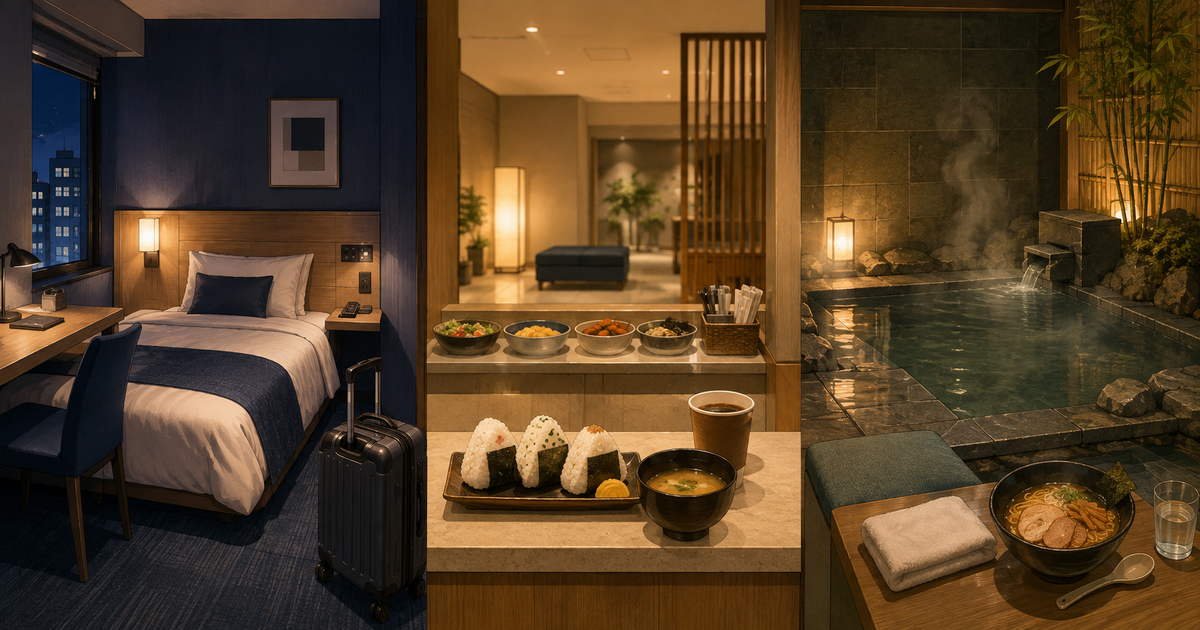
Toyoko Inn’s official website currently explains three main breakfast styles: buffet, onigiri, and hotdog-bun sandwiches. Some properties instead provide a continental breakfast. The exact format is displayed on each hotel page or in the hotel search results, so check the branch rather than assuming that the breakfast you saw in one video appears nationwide.
Why you may choose Toyoko Inn
- You want a straightforward business-hotel stay.
- An included morning meal helps you control daily travel costs.
- You prefer to begin sightseeing without first searching for breakfast.
- You are comfortable with a functional room rather than a resort atmosphere.
- You found a branch with better access than the competing options.
What to check before booking Toyoko Inn
- The specific breakfast style and serving hours
- Room occupancy, bed width, and floor area
- Check-in and check-out times for your plan
- Whether self-check-in, lockers, or luggage storage are available
- Parking restrictions and fees if you are driving
- Membership conditions rather than assuming a member benefit applies automatically
A free breakfast is useful only if it suits you. If you want a large Western breakfast, need strict allergy control, or plan to leave before service begins, compare the actual menu and hours. “Breakfast included” does not mean “every possible breakfast preference solved.” That would be a heroic amount of responsibility for one rice ball.
Best fit: Solo travelers, couples comfortable with compact rooms, repeat visitors, and travelers who value a simple morning routine.
Less ideal: Travelers seeking a spa-like stay, large family rooms, or extensive in-room space.
Dormy Inn: Best for Baths, Recovery, and a More Enjoyable Hotel Evening
Dormy Inn sits in a slightly different position. Many properties emphasize large public baths and saunas, while participating hotels offer complimentary late-night Yonaki Soba, a light soy-sauce ramen. The official chain service page also describes other property-dependent services such as post-bath ice treats and morning probiotic drinks.
The practical attraction is easy to understand: after a long day of trains and sightseeing, you can return to the hotel, bathe, relax, and sometimes have a small late-night meal. The accommodation becomes part of your recovery plan rather than only a bed near a station.
Why you may choose Dormy Inn
- A large public bath is a meaningful part of your stay.
- You want the hotel evening to feel more relaxing.
- You appreciate small included services such as Yonaki Soba where offered.
- You are willing to compare the total experience, not only the lowest room rate.
- You have several nights of intense sightseeing and would genuinely use the bath.
What to check before booking Dormy Inn
- Whether the property has a large public bath and whether the water is natural hot-spring water
- Bath hours, closures, gender arrangements, age rules, and tattoo policy
- Which complimentary services are currently offered and at what times
- Whether breakfast is included or charged separately
- Room area, bed layout, station access, and total price
A large public bath is not automatically an onsen. “Onsen” refers to natural hot-spring water meeting applicable requirements, while a public bath may use heated ordinary water. Read the exact property description.
Before using any communal hotel bath, read our complete Japan onsen etiquette guide for washing order, towels, tattoos, private-bath alternatives, children, and health precautions.
Also, do not pay a premium for facilities you will not use. If you dislike shared bathing and arrive after the late-night service finishes, much of Dormy Inn’s extra appeal may disappear for you.
Best fit: Couples, solo travelers, bath lovers, and visitors who want recovery time built into a busy itinerary.
Less ideal: Travelers focused only on the lowest rate or anyone who will not use the property’s main comfort features.
Which Chain Is Best by Traveler Type?
| Traveler type | First chain to check | Reason |
|---|---|---|
| Solo traveler on a short city stay | APA Hotel | Urban choice and efficient use of compact space can work well for one guest. |
| Traveler who wants breakfast included | Toyoko Inn | The property page clearly identifies its breakfast style; confirm your rate and branch. |
| Traveler who walks all day | Dormy Inn | A large public bath can make the evening feel like recovery rather than merely collapse. |
| Couple with two large suitcases | Compare exact rooms | A twin or larger double at any chain may beat a compact room at your usual favorite. |
| Family with children | Compare exact occupancy rules | None of the three should be selected from the brand name alone; bed count and child policies matter. |
| One-night station stop | APA or Toyoko Inn | Choose the property with the easiest real route from your arrival platform. |
| Two-night rest in the middle of a long trip | Dormy Inn | The bath and hotel services may add more value when you have time to use them. |
Room Size and Luggage: The Brand Name Will Not Save You
Japanese business-hotel rooms are often smaller than American travelers expect. The smartest comparison is property against property and room against room.
Before booking, check four numbers:
- Room area
- Bed width
- Maximum occupancy
- Number of actual beds
Then study the floor plan or wide-angle photos with healthy suspicion. Ask whether both suitcases can open without blocking the entrance, bathroom, or evacuation route. A 12-square-meter room may be perfectly efficient for one traveler and deeply unromantic for two adults performing synchronized suitcase gymnastics.
If you are changing cities, consider sending your larger bag ahead. Our Japan luggage-forwarding guide explains hotel-to-hotel delivery and what to confirm with the receiving property.
Breakfast: Included Does Not Always Mean Better
Toyoko Inn has the clearest breakfast-first positioning of these three, but that does not make it the automatic winner. Compare:
- Whether breakfast is included in your selected rate
- Serving hours and your departure time
- Buffet, onigiri, sandwich, or other format
- Allergy and dietary information
- How crowded the dining area may be at peak time
- Nearby cafés or convenience stores
APA breakfasts vary by property and plan. Dormy Inn breakfasts are often treated as a stronger part of the stay, sometimes featuring local dishes, but may cost extra. Do not compare a room-only rate at one hotel with a breakfast-included rate at another and call the first one cheaper.
Public Baths: Dormy Inn Usually Has the Strongest Case
If bathing is important, Dormy Inn should normally be your first search. Still, verify the specific facility. Bath water type, sauna availability, hours, tattoo rules, maintenance closures, and accessibility differ.
Some APA properties also have public baths, but the feature is not universal. Toyoko Inn is generally not chosen for a large-bath experience. If you want a traditional stay centered on bathing and meals, compare these chains with a ryokan using our ryokan vs hotel guide.
Location: Measure the Real Walk, Not the Marketing Walk
“Near the station” can be technically true and still involve a large station, an inconvenient exit, stairs, an overpass, and rain arriving sideways.
Check the route from the exact station exit on a map. If you have luggage, inspect elevators and street crossings. A hotel seven minutes from a small station may be easier than one three minutes from the opposite side of Shinjuku Station.
Also consider where you will go each day. Saving ten dollars on the room is not a victory if you spend extra time and fares repeatedly crossing the city.
Booking Direct vs an Online Travel Agency
Compare the final booking conditions, not only the first displayed price. A chain’s direct rate may include membership benefits, a different cancellation policy, or a specific package. An online travel agency may be easier for managing a multi-city itinerary or may offer its own discount.
Before paying, confirm:
- Total price for the correct number of guests
- Taxes and fees included or collected later
- Breakfast and other services included
- Payment timing and accepted methods
- Cancellation deadline in Japan Standard Time
- Room type and smoking or non-smoking status
- Whether you booked the intended property—not another branch with a similar name
Keep the confirmation email and property address available offline. For arrival procedures, passport requirements, late check-in, and luggage storage, read our Japan hotel check-in guide.
A Note From Sho: Choose the Problem You Want the Hotel to Solve
I work in accommodation management in Tokyo, and I have assisted many overseas guests with reservations, luggage, transportation, and unexpected travel problems.
From that perspective, I would not choose a hotel chain only because someone online declared it “the best.” First decide what you need the hotel to do.
- If the hotel is simply your base, prioritize location and a room you can use comfortably.
- If breakfast removes stress from your morning, confirm the actual service.
- If bathing helps you recover, pay for a hotel where you will truly use the bath.
- If you have large luggage, choose space before brand loyalty.
Japanese business hotels can be very good at fitting everything necessary into a small area. They are less talented at making your suitcase magically smaller. I checked. Still no button for that.
Common Booking Mistakes
- Choosing the chain before the location: The wrong branch can add unnecessary travel every day.
- Reading “double” as two beds: A double room normally has one bed; a twin normally has two.
- Ignoring floor area: Bed photos do not show whether luggage can open.
- Assuming chain-wide facilities: Breakfasts, baths, saunas, laundry, parking, and lockers vary.
- Comparing incomplete prices: Match occupancy, breakfast, taxes, cancellation terms, and payment conditions.
- Booking the wrong branch: Similar hotel names can refer to different locations in the same city.
- Arriving late without contact: Tell the hotel if you will miss the expected arrival time.
Frequently Asked Questions
Which is cheapest: APA Hotel, Toyoko Inn, or Dormy Inn?
There is no permanent cheapest chain. Rates change by city, date, demand, room, occupancy, and plan. Toyoko Inn often appeals to breakfast-conscious budget travelers, while APA can offer many urban choices. Dormy Inn may cost more when its bath and extra services add value. Compare the same dates and inclusions.
Which chain has the largest rooms?
No chain wins every property and room category. Compare the published floor area and layout of the exact rooms available for your dates.
Which is best for first-time visitors to Japan?
APA or Toyoko Inn can be a practical first stay when location and simplicity matter. Dormy Inn may be more enjoyable if you are comfortable using a public bath. The easiest property for your itinerary is usually better than a chain-wide reputation.
Is Toyoko Inn breakfast always a buffet?
No. Its official website describes buffet, onigiri, and sandwich styles, while some hotels provide a continental breakfast. Check the individual hotel page.
Does every Dormy Inn have a natural onsen?
Do not assume so. Many properties promote large baths, and some use natural hot-spring water, but the exact bath type and facilities must be confirmed on the property page.
Does every APA Hotel have a public bath?
No. Some APA properties have large baths, but it is not a universal chain feature. Verify the facilities for your hotel.
Which chain is best with large luggage?
Choose by room size and layout rather than chain. A larger twin room at one branch may work far better than a compact double at another. Luggage forwarding can also reduce what you carry between cities.
Final Verdict
Choose APA Hotel for a location-focused, efficient urban stay.
Choose Toyoko Inn for a simple stay with a practical morning routine and a property-specific breakfast offering.
Choose Dormy Inn when a public bath, relaxation, and late-night hotel comforts justify the price.
Then ignore the brand summary for five minutes and inspect the exact property. Check the map, room measurements, total price, breakfast, bath, luggage arrangements, and cancellation terms. That final property-level check is what turns a general recommendation into the right booking for your trip.